What Is Amigurumi? The Cute Japanese Art of Crocheted Stuffed Toys
Amigurumi is the Japanese art of crocheting or knitting small stuffed figures, from tiny animals and dolls to food with smiling faces. If you love handmade things, you have almost certainly seen these toys, yet the craft is still often misunderstood. In this guide, the GauHandmade team explains what the word means, where the craft comes from, how it is made and how you can start, or simply own a piece of it.
Amigurumi requires patience, precision and a good dose of childlike imagination. Each figure is shaped stitch by stitch, so the maker controls every curve, color and expression. That is why these little toys feel so full of personality, and why they have become such meaningful, adorable gifts all over the world.
What Does the Word Amigurumi Mean?
The word combines two Japanese terms. Ami means crocheted or knitted, and nuigurumi means stuffed doll or stuffed toy. Put together, the name simply means "crocheted or knitted stuffed toy." In Japanese it is written 編みぐるみ, and in English it is usually pronounced "ah-mee-goo-roo-mee."
Although knitting is part of the definition, the vast majority of pieces today are crocheted. Crochet produces a denser fabric that holds its shape and hides the stuffing, which is ideal for small three-dimensional toys. You can read a concise overview of the term on Wikipedia's amigurumi page.
A Short History of Amigurumi and Kawaii Culture
Crocheted and knitted toys have existed in many cultures, but the style we know today grew up in Japan, where it has been popular for decades. It is closely linked to kawaii, the Japanese culture of cuteness. Kawaii design favors round shapes, oversized heads, small bodies and simple, gentle faces, and you can see every one of those features in a classic crocheted bear or bunny.
In the early 2000s, the craft began to spread far beyond Japan. Crafters shared photos and free patterns on blogs, then on online marketplaces and social media, and the cute little toys quickly found fans in North America, Europe and Asia. Today, amigurumi is practiced worldwide and shows no sign of slowing down.
Part of its appeal is that it welcomes everyone. Children love the toys, young adults collect them, and many middle-aged and older crafters enjoy making them as a relaxing hobby. The same basic stitches can create a simple ball or a detailed character, so there is always something new to learn.
How Amigurumi Differs from Other Crochet Toys
Not every crocheted toy follows this style. The Japanese approach has a few distinctive features that set it apart:
| Feature | Amigurumi style | Other crochet or knitted toys |
|---|---|---|
| Construction | Worked in continuous spiral rounds | Often worked flat in rows and seamed |
| Fabric | Very tight stitches, no gaps for stuffing to show | Looser fabric, sometimes lined |
| Hook size | Smaller than the yarn label suggests | Usually the recommended size |
| Proportions | Big head, small body, kawaii features | More realistic or varied proportions |
| Size | Usually small, from keychain to cuddle size | Any size, including large blankets and pillows |
| Faces | Simple: safety eyes or embroidered features | Varies widely |
In short, if you see a small, cute, tightly crocheted figure with a round head and a simple face, you are almost certainly looking at amigurumi.
What Are Handmade Amigurumi Toys Used For?
Because they are small, sturdy and charming, amigurumi toys have many uses beyond the toy box.

Keychains, Phone Charms and Bag Hangers
The most common use is as a hanging charm. Tiny amigurumi figures make adorable keychains, phone charms and backpack hangers, adding a playful highlight to everyday items. Our cosplay duck keychain is a good example. When making one yourself, keep the toy small and add a strong hanging loop at the top of the head.

Because each piece is crocheted by hand and shaped by the maker's creativity, every charm turns out a little different, which makes it a unique accessory.
Desk and Home Décor
Larger crocheted animals make charming decorations for a desk, a living room shelf or a window frame. Colorful little bears and bunnies brighten a room, and many people say simply seeing them makes them feel happier during a busy day.

Children's Toys
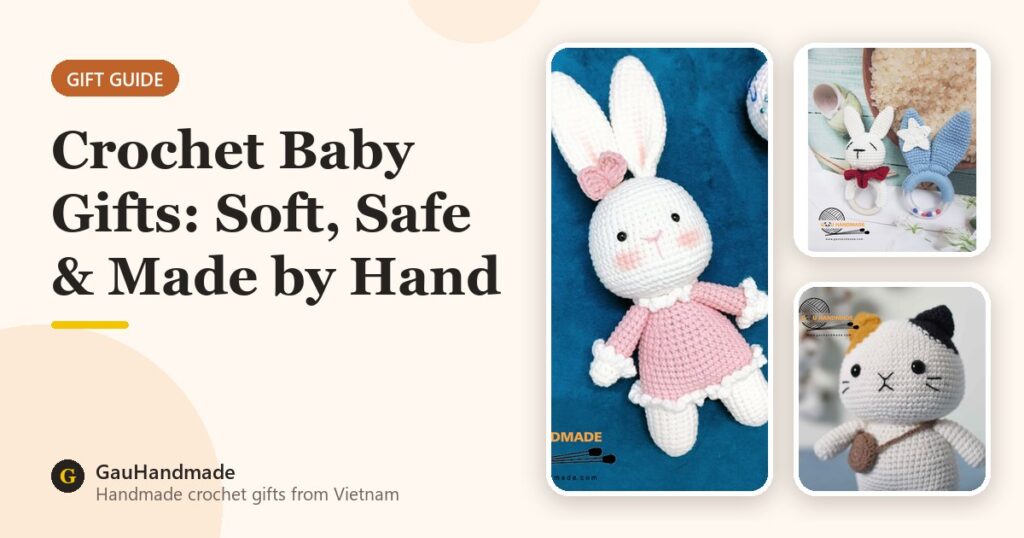
Children adore soft toys, and a crocheted friend can become a constant companion. These toys are soft, colorful and small enough for little hands. When a piece is meant for a baby, the standards must be stricter: soft cotton yarn, tight stitches, embroidered eyes for the youngest children and no small parts that could come loose. Our handmade rattles are designed with babies in mind.
Meaningful Gifts
A handmade amigurumi toy is a deeply personal gift. Each one takes hours of careful work, so it tells the recipient they are truly special. That sense of being appreciated builds a connection between giver and receiver that a store-bought toy rarely creates.

Why People Love Amigurumi
A Creative Outlet
Designing and making a toy involves shaping, color choice and placing the eyes to create the right expression. Crafters who practice regularly develop a real eye for proportion and design.
Lovely, Expressive Shapes
Kawaii proportions make almost any subject look friendly. A carrot, a cloud or a dinosaur becomes instantly lovable once it has a round body and a small smile.
One-of-a-Kind Handmade Art
No two handmade amigurumi pieces are identical. Tiny differences in tension, stuffing and facial placement give each toy its own character, which is why collectors value them so highly.
Affordable, Easy-to-Find Materials
You only need yarn, a hook, stuffing and a few notions to start. These supplies are easy to find in craft stores and online, and a single ball of yarn can make several small toys.
Is Making Crochet Toys a Good Hobby?
For many people, the answer is a clear yes. Toy making is portable: a small project, a hook and a ball of yarn fit easily in a bag, so you can crochet on the bus, in a waiting room or on the sofa in the evening. The repetitive rhythm of working round after round is calming, and many crafters describe it as a welcome break from screens.
It is also a rewarding hobby because the results come quickly. A small figure can be finished in an evening, and each project teaches a new skill, from color changes to embroidering faces. Over time, you build a little family of handmade friends to keep, display or give away, and many makers find that friends and family start asking for toys of their own.
Tools and Materials for Amigurumi
Before you start, gather the basic supplies. Most beginners can buy everything for one project in a single trip to a craft store.

Yarn
Cotton and cotton-blend yarns are favorites because they show stitch definition clearly and hold their shape. Acrylic yarn is affordable and comes in endless colors, while milk cotton is soft and popular for baby toys. Pay attention to yarn thickness: if a pattern does not specify, a medium-weight cotton is a safe choice. The Craft Yarn Council's yarn weight system is a helpful reference for comparing thicknesses.
Crochet Hook
Hooks for amigurumi usually range from about 2 mm to 5 mm. Choose a hook slightly smaller than the yarn label recommends, so the stitches are tight and the stuffing stays hidden. Ergonomic handles make long sessions more comfortable.
Stuffing
Polyester fiberfill is the most popular amigurumi stuffing. It is light, springy and washable. Add it in small pieces and shape as you go to avoid lumps.
Yarn Needle
Most toys are crocheted in separate parts, then sewn together. A blunt-tipped yarn or tapestry needle helps you join pieces and weave in ends without splitting the yarn.
Other Helpful Notions
- Stitch markers to mark the first stitch of each round
- Safety eyes with locking backs, or embroidery floss for stitched eyes
- Small sharp scissors for trimming yarn
- Pins to hold parts in place before sewing
Basic Amigurumi Stitches and Techniques
The good news is that you only need a handful of stitches to make most toys. Patterns build complexity by combining them in different ways.
Magic Ring
The magic ring, also called the adjustable ring, is how most amigurumi pieces begin. You wrap the yarn into a loop, work the first round of stitches into it, then pull the tail to close the center completely. This leaves no hole at the top of a head or the tip of a limb.
Single Crochet in a Spiral
Single crochet (sc), sometimes shown as an "X" in charts, is the workhorse stitch. Rounds are worked in a continuous spiral without joining or chaining, which avoids a visible seam. A stitch marker in the first stitch of each round helps you keep count.
Increase
An increase (inc) means working two single crochets into the same stitch. Increases make each round larger and create the curved shapes of heads and bodies.
Invisible Decrease
A decrease (dec) joins two stitches into one to make a round smaller. The invisible decrease, worked through the front loops only of two stitches, gives a much neater finish than a standard decrease and is the preferred method for smooth, professional-looking toys.
Slip Stitch and Fastening Off
A slip stitch (sl st) is used to finish a piece neatly before cutting the yarn. Leave a long tail if you need to sew the part onto the body.
Front Loop and Back Loop Only
Working in the front loop only (FLO) or back loop only (BLO) creates a ridge, which is useful for the base of a body, a shoe sole or a collar.
Reading an Amigurumi Pattern
Patterns are written in short abbreviations, which can look like a secret code at first. Once you learn a few, you can follow almost any design. These are the terms you will meet most often:
| Abbreviation | Meaning | What it does |
|---|---|---|
| MR | Magic ring | Starts a piece with a closed center |
| sc | Single crochet | The basic stitch for the whole toy |
| inc | Increase | Two stitches in one, making the round bigger |
| dec / invdec | Decrease / invisible decrease | Two stitches joined into one, making the round smaller |
| sl st | Slip stitch | Finishes a piece neatly |
| FLO / BLO | Front / back loop only | Creates a ridge or texture line |
| R1, R2… | Round 1, Round 2… | Marks each spiral round |
| (6) | Stitch count | The number of stitches you should have at the end of the round |
A typical line reads like this: "R3: (sc, inc) x6 (18)." It means you repeat one single crochet followed by one increase six times, finishing the round with 18 stitches. The number in parentheses is your checkpoint; if your count does not match, look back before continuing.
How to Make an Amigurumi Bear, Step by Step
A bear is a classic first project. Here is the general process:
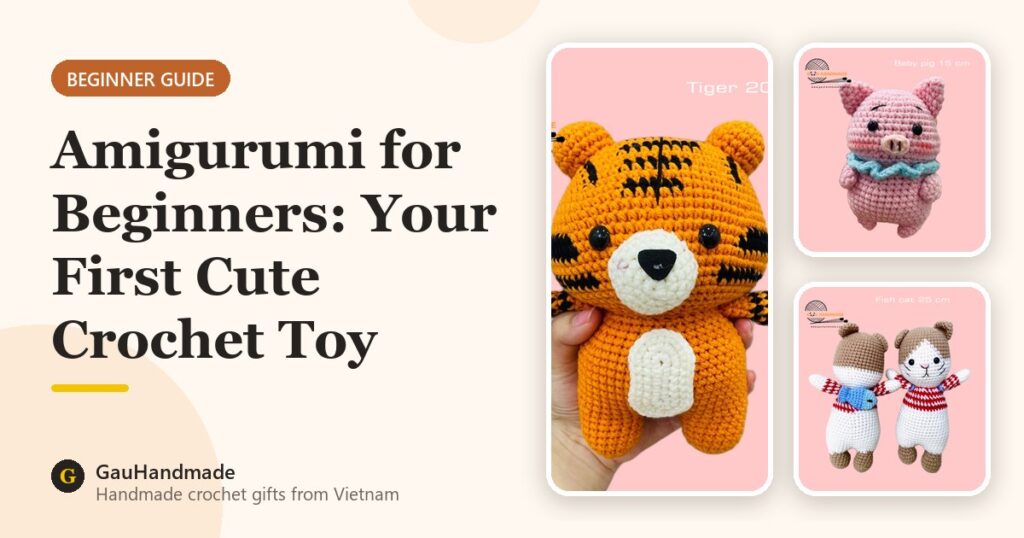
- Choose a pattern. A beginner pattern lists the materials and tells you exactly how many stitches to work in each round. Free and paid patterns are widely available, from simple to advanced.
- Gather materials. Pick yarn, a matching hook, stuffing, safety eyes or embroidery floss and a yarn needle.
- Crochet the parts. Make the head, body, ears, arms and legs separately, following the round-by-round instructions.
- Stuff firmly. Fill the head and body before closing them, shaping as you go.
- Assemble. Pin each part in place, check the look, then sew everything together with the yarn needle.
- Add the face. Attach safety eyes before closing the head, or embroider eyes, a nose and a smile at the end.
Want to practice? Try our free patterns for a pig, an ox or Stitch.
Beginner Tips for Your First Toy
- Start small and simple. Your first amigurumi does not need to be perfect. A ball, a heart or a basic bear teaches every core skill.
- Use light-colored, smooth yarn. It is easier to see your stitches than with dark or fuzzy yarn.
- Always use a stitch marker. Losing your place in a spiral is the most common beginner mistake.
- Count every round. Check your stitch count against the pattern before moving on.
- Keep tension even. Tight, consistent stitches matter more than speed.
- Stuff more than you think. Toys look best when firmly stuffed, and the stuffing compresses over time.
- Be patient with faces. Pin the eyes and try a few positions before fixing them; small changes alter the whole expression.
Common Beginner Mistakes and How to Fix Them
- Stuffing shows through the stitches: switch to a smaller hook or crochet more tightly.
- The piece looks wavy or ruffled: you have too many stitches; recount and check your increases.
- The piece curls into a cone too fast: you are missing increases; recount the previous round.
- A visible line runs up the side: you may be joining rounds with a slip stitch. Work in a continuous spiral instead.
- Holes appear at decreases: use the invisible decrease through the front loops only.
- The toy is lumpy: add stuffing in small tufts and roll the piece in your hands to even it out.
Popular Amigurumi Themes and Ideas
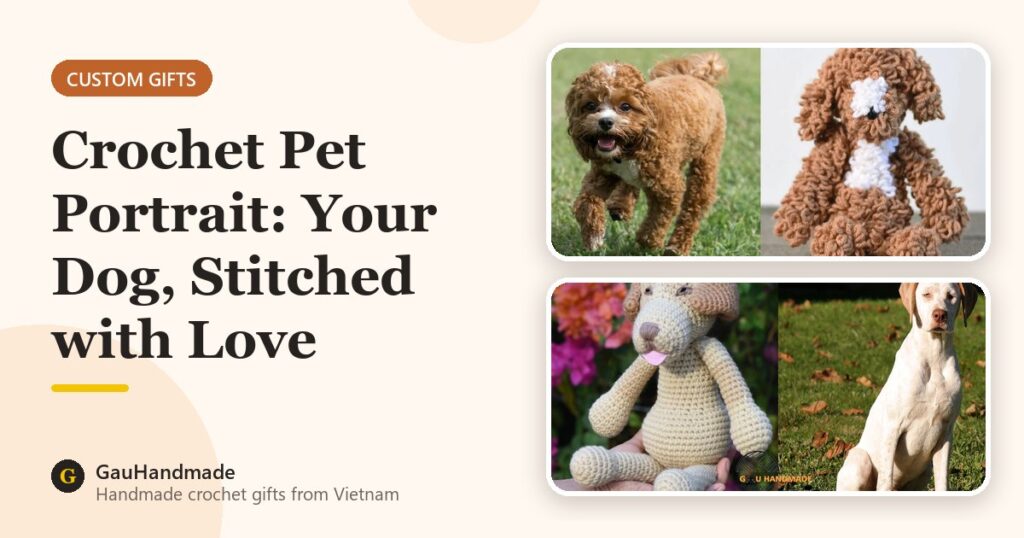
Once you know the basics, the possibilities are endless. Animals such as bears, rabbits, cats, dogs and pigs remain the most popular amigurumi subjects. Dolls, including look-alike portrait dolls, are another favorite, along with cartoon-inspired characters, seasonal pieces for Halloween and Christmas, cute food with faces and tiny keychain friends.
Some designs are even posable, like our Marcus the Worm posable plushie, whose flexible body can be styled into playful poses on a desk or shelf.
Where to Buy or Custom Order Amigurumi
If crocheting feels too time-consuming but you still want a unique handmade toy, GauHandmade can help. We are a small team in Vietnam that has been making crochet toys since April 2022, and every piece is 100% handmade. Browse our stuffed crochet collection for ready-made animals and characters, or visit our custom crochet section for look-alike dolls and personalized pets.


For custom orders, send us a photo or description by email at info@gauhandmade.com, on Facebook Messenger or through our contact page. Personal names can be embroidered on clothes and toys. We ship worldwide: 7-15 days to the USA, 10-20 days to the UK, Europe, Canada and Australia, and 10-30 days to other countries. To keep your toy looking its best, follow our care guide.
Frequently Asked Questions about Amigurumi
What is the difference between amigurumi and crochet?
Crochet is the general technique of making fabric with a hook. The Japanese toy style is one specific use of crochet: small stuffed figures worked in tight spiral rounds with cute, kawaii proportions.
Is it hard to learn?
Not at all. You only need a few basic stitches: the magic ring, single crochet, increase and decrease. Most beginners can finish a simple ball or bear after a few practice sessions.
Can it be knitted instead of crocheted?
Yes. The name covers both knitted and crocheted toys, but crochet is far more common because it creates a firmer fabric that hides the stuffing.
Are these crochet toys safe for babies?
They can be, if made with soft cotton yarn, tight stitches, clean stuffing and embroidered eyes, with no small detachable parts. Always supervise young children during play.
How long does it take to make one?
A small keychain can take an hour or two, while a detailed doll may take many hours or several days, depending on size, details and the maker's experience.
Bring Home a Piece of Japanese Handmade Art
Unique, adorable and full of heart, amigurumi toys work beautifully as décor, as companions for children and as meaningful gifts. Whether you pick up a hook and try the craft yourself or let our makers create a one-of-a-kind piece for you, you are joining a worldwide community that loves handmade cuteness.
Order nowPosts on the same topic:
-

Crochet Birthday Gifts for Every Age and Personality
-
Handmade Gifts from Vietnam, Crafted Stitch by Stitch
-
Crochet Keychain Ideas: 15 Cute, Easy Gifts They'll Love
-
Crochet Anniversary Gifts: 11 Unique Ideas You'll Love
-
Crochet Pet Portrait: 6 Simple Steps to a Lovely Twin of Your Dog
-
Amigurumi for Beginners: 5 Easy Steps to Your First Cute Toy
-
Crochet Baby Gifts: 9 Adorable Ideas and Essential Safety Tips
-

Amigurumi Care 2026: The Essential Guide for Cute Crochet Toys
-

Crochet Christmas Gifts 2026: 17 Best Unique Handmade Gift Ideas for Everyone on Your List
-

Handmade Jellycat Style Crochet Heart: Cute Gifts for Valentine's Day and Every Day of Love
-

Free Pig Amigurumi Pattern: Pinky the Little Pig (Cute Easy Guide)
-

Crochet Teddy Bear Gifts: The Complete Guide to Choosing a Handmade Bear